Why Organization Is the Foundation of Beautiful Living
There is a moment that every homeowner in Brentwood, Nashville, or Franklin has experienced. You walk into a space in your home — maybe it is the pantry, maybe the master closet, maybe the playroom — and instead of feeling calm, you feel a weight settle on your shoulders. The visual clutter, the items with no home, the systems that stopped working months ago.
Professional organization is not about perfection. It is about creating spaces that support the way you actually live, spaces that give you back your time, your energy, and the simple pleasure of walking into a room that feels right. After years of organizing homes across Middle Tennessee, here are seven principles that make the difference between a quick tidy-up and a true transformation.
1. Edit Before You Organize
This is the principle that separates professional results from weekend projects. Before you buy a single bin or basket, you must edit what you own. Every professional organizer will tell you the same thing: you cannot organize clutter.
Start by removing everything from the space. Yes, everything. Then sort items into clear categories: keep, donate, relocate, and discard. Be honest with yourself. If you have not used something in a year, if it does not bring you joy or serve a clear purpose, it is taking up space that could be used for something that does.
Nashville-area tip: Brentwood and Franklin have wonderful donation resources. Organizations like The Store Nashville, Goodwill of Middle Tennessee, and local buy-nothing groups make it easy to give your pre-loved items a meaningful second life.
2. Think in Zones, Not Rooms
One of the most common mistakes homeowners make is organizing by room rather than by activity. A kitchen, for example, is not one space — it is a collection of zones: cooking, baking, coffee and tea, school lunches, entertaining supplies, and everyday dining.
Map out the zones in each space and organize around activities. Store coffee mugs, beans, filters, and your French press together near the coffee maker. Keep baking supplies — flour, sugar, measuring cups, baking sheets — in a dedicated area near the oven. Group school lunch supplies in an easily accessible spot that your kids can reach independently.
This zone-based approach means that everything you need for a specific task is within arm’s reach. No more crossing the kitchen four times to make a cup of coffee.
3. Invest in Matching Containers
This is where aesthetics meet function, and it is the single change that makes the most dramatic visual impact. When you replace a jumble of mismatched food boxes, bags, and random containers with a uniform set of clear, labeled containers, the effect is transformative.
Our go-to recommendations:
- Pantry: Clear acrylic or glass containers with airtight lids for dry goods. Uniform height on each shelf creates a clean, intentional look.
- Closets: Matching hangers (slim velvet in a neutral color) immediately create visual calm. Add uniform bins for accessories, seasonal items, and folded knits.
- Bathrooms: Decant everyday products into matching pump bottles. Use drawer dividers for cosmetics and small items.
- Playrooms: Large, open bins with picture labels for younger children. Clear, stackable containers for craft supplies and small toys.
The key is consistency. You do not need the most expensive containers. You need containers that match each other within a space.
4. Label Everything (Yes, Everything)
Labels are the unsung hero of lasting organization. Without them, even the most beautifully organized space will slowly drift back to chaos as family members put things back in the wrong spot — or, more likely, do not put things back at all.
A label removes all ambiguity. It tells every member of your household exactly where something belongs, which means they can help maintain the systems you have created.
Labeling styles we love for Nashville homes:
- Clean, minimalist labels printed on a label maker for modern homes
- Handwritten calligraphy tags on linen ribbon for a more organic, Southern aesthetic
- Chalkboard labels for pantries and play spaces where contents change frequently
- Simple painter’s tape and a marker for utility spaces like garages and attics — function over form
5. Use Vertical Space
In many Nashville-area homes, especially in older properties in Belle Meade or renovated bungalows in East Nashville, square footage is at a premium. The solution? Look up.
Vertical storage strategies that work:
- Over-door organizers on pantry, closet, and bathroom doors for spices, shoes, cleaning supplies, and toiletries
- Floating shelves in kitchens, laundry rooms, and home offices for everyday items that need to be accessible but off the counter
- Stackable risers inside cabinets to double your usable shelf space
- Wall-mounted hooks and pegboards in mudrooms, garages, and kids’ rooms for bags, coats, tools, and accessories
- Shelf dividers in closets to keep folded items (sweaters, jeans, handbags) upright and visible
The goal is to maximize every inch of available space without making the room feel crowded. When done well, vertical storage actually makes a space feel larger because it keeps surfaces clear.
6. Create a “Landing Zone” for Daily Life
Every home needs a designated spot where the daily chaos of keys, mail, backpacks, and sunglasses can land without taking over your kitchen counter or dining table. In the organizing world, we call this a landing zone, and it is one of the most impactful systems you can create.
A well-designed landing zone includes:
- Hooks or a small rack for keys
- A tray or basket for mail and papers that need attention
- Individual cubbies or hooks for each family member’s bag, coat, and accessories
- A small dish or box for everyday carry items like wallets and sunglasses
- A charging station for phones and devices
The best landing zones are positioned near your primary entry point — whether that is the front door, the garage entry, or the mudroom. In many Brentwood and Franklin homes, the mudroom off the garage is the natural choice. Make it work for your family’s actual daily flow, not some idealized version of how you think you should enter your home.
7. Maintain with Micro-Habits
Here is the truth that no one tells you about home organization: the transformation is the easy part. Maintenance is the real work. But it does not have to be hard if you build small habits into your daily routine.
Five-minute daily habits that keep spaces organized:
- The nightly reset — Spend five minutes before bed returning items to their designated spots. Kitchen counters cleared, pillows fluffed, shoes by the door.
- One in, one out — For every new item that enters your home, one similar item leaves. This prevents accumulation from creeping back in.
- The weekly sweep — Choose one day per week to do a quick maintenance pass on your most-used spaces: pantry, closet, bathroom counters.
- Seasonal editing — At each change of season, spend an hour editing your closet and storage areas. Rotate seasonal items and let go of anything you did not use in the past season.
- The 30-second rule — If a task takes less than 30 seconds (hanging up a coat, putting a dish in the dishwasher, filing a paper), do it immediately instead of setting it down to deal with later.
Transform Your Home, Transform Your Daily Life
Organization is not about having a Pinterest-perfect home. It is about waking up each morning in a space that supports you, that gives you back your time, and that lets you focus on the things that actually matter — your family, your work, your passions, and the beautiful life you are building in this incredible city.
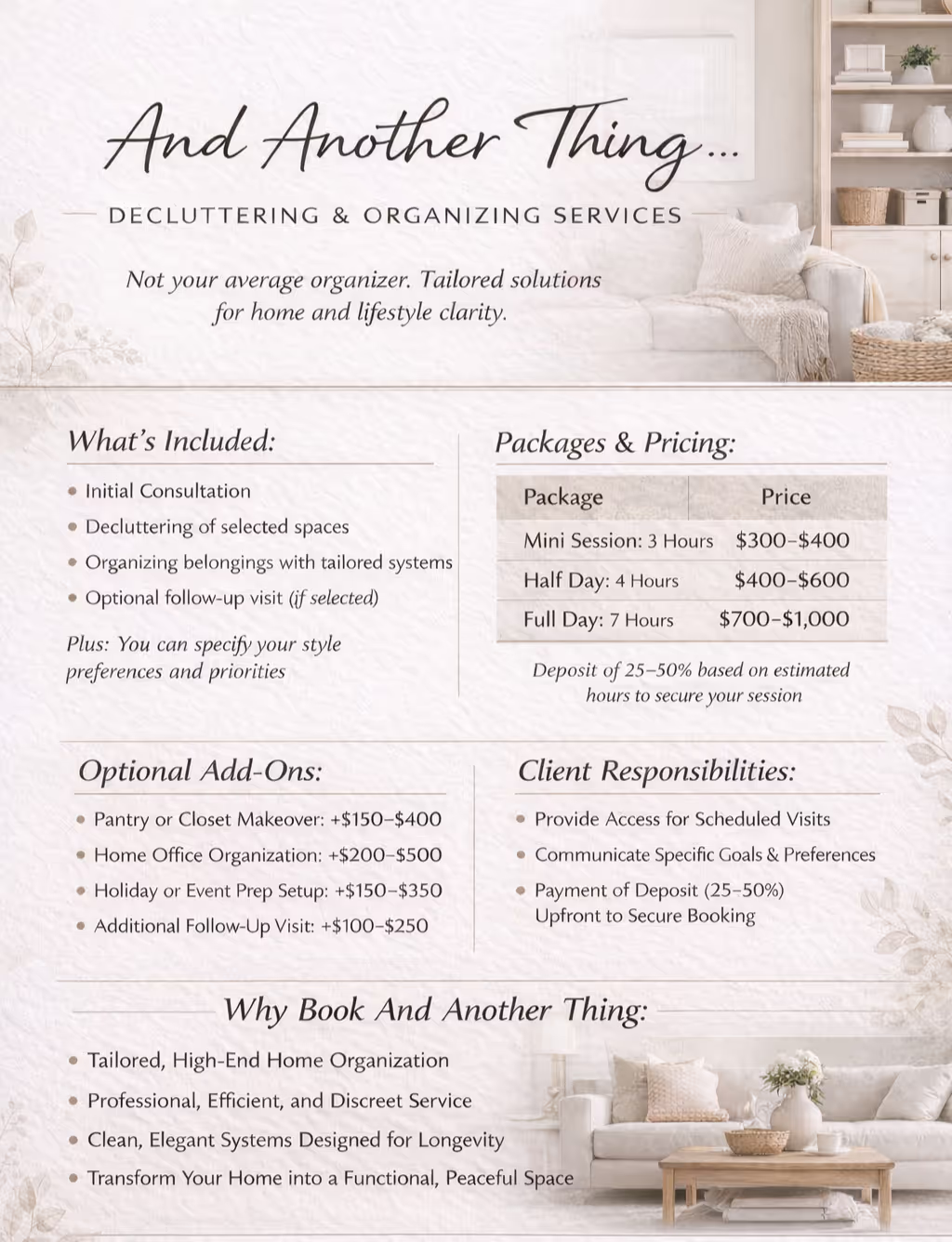
Ready to transform your space? At And Another Thing, we bring professional organization and styling to homes across Brentwood, Nashville, Franklin, and Belle Meade. From a single closet to a whole-home overhaul, we create calm, beautiful spaces that truly fit your life. Book a consultation and let us help you fall in love with your home again.